

Fall Houseplant Care: When to Bring Your Plants Inside in Greenville, SC
As the days start getting shorter here in Greenville, your houseplants are noticing before you are. That gorgeous late-summer light is fading, temperatures are starting to dip, and your plants are getting ready to shift into a slower, quieter season.
In the Upstate, the average first fall frost in Greenville is around November 2, although the exact timing varies from year to year. That means there's a deadline for getting tropicals and other cold-sensitive plants back indoors. A little prep now means healthier, happier plants all fall and winter long. Here's your checklist.
1. Move Plants Closer to Light
That spot by the window that was almost too bright in July? It may become just right as the days get shorter. As the sun's angle changes and daylight hours decrease, your plants may receive less usable light indoors. Walk through your space and pay attention to how the light has shifted. You may need to move some plants closer to a bright window or rotate them so all sides receive even exposure.
South-facing windows are often your best bet for maximizing winter light, while west-facing windows can also provide strong afternoon light. Just keep an eye on plants that are sensitive to intense direct sun.
2. Adjust Your Watering Routine
As light levels and temperatures change in fall, many houseplants grow more slowly and may need watering less often. But don't switch to a rigid winter watering schedule. Your plant's needs will depend on its species, potting mix, container, light, and indoor conditions.
Instead:
Check the soil before watering rather than watering by the calendar
For many common houseplants, allow the top 1–2 inches of soil to dry before watering again
Pay attention to cooler temperatures and lower light, which can slow evaporation and growth
If a plant stops actively growing, reduce or pause fertilizing
Plants that continue actively growing indoors may still benefit from occasional feeding
3. Wipe Down Those Leaves
Dust builds up over the summer and can interfere with the light your plant needs as days get shorter. Give leaves a gentle wipe with a damp cloth, or set smaller plants in the shower for a quick rinse.
This is also a great time to check the undersides of leaves, stems, and around the soil line for pests. Before you bring your plants indoors, check for spider mites, mealybugs, aphids, scale, and fungus gnats.
4. Gradually Bring Outdoor Plants In
If you moved any houseplants onto the porch or patio for the summer, now's the time to start transitioning them back indoors, well before the first frost.
For most tropical houseplants, start bringing them inside when nighttime temperatures consistently approach 50–55°F rather than waiting for frost. Many tropical plants can experience cold damage around 50°F or below, so it's better to bring them in early than risk waiting too long.
A few tips:
Inspect plants thoroughly for insects before bringing them inside
Check leaves, stems, the soil surface, and underneath the container for pests or egg masses
If you find pests, treat the plant appropriately before bringing it inside; insecticidal soap can be effective against many common soft-bodied pests when used according to the label
Move plants into progressively lower light for several days before bringing them inside if possible, helping them adjust to the lower-light conditions indoors
Expect some yellowing or leaf drop as plants adjust to their new environment — a little transition stress is normal
5. Hold Off on Major Repotting
Fall isn't usually the best time for a major repotting project because many houseplants are slowing their growth. In general, late winter or spring is the best time for routine repotting, when plants are entering active growth and can recover more quickly.
That said, you don't have to wait until spring if a plant is severely rootbound, has drainage problems, or needs a larger container for another immediate reason. In those cases, repotting when necessary is perfectly reasonable.
For routine repotting, though? Put it on the spring to-do list.
6. Group Plants Together
As furnaces and heaters kick on, indoor air can become noticeably drier, something many tropical houseplants don't love.
Grouping plants together can create a slightly more humid microclimate around them. For a more significant humidity boost, especially in a heated home, a small room humidifier is generally more effective.
7. Watch for Pests
Outdoor plants can bring pests indoors, where warm conditions can allow some insects to thrive and spread.
Check your plants regularly after bringing them inside, especially if they spent the summer outdoors. Look for spider mites, mealybugs, scale, aphids, and fungus gnats, paying particular attention to the undersides of leaves, stems, and the soil surface.
Catching a small pest problem early is much easier than dealing with an infestation that has spread throughout your indoor collection.
Frequently Asked Questions
When should I bring my plants inside in Greenville, SC?
Start transitioning tropical and cold-sensitive outdoor plants indoors when nighttime temperatures consistently approach 50–55°F, rather than waiting for the first frost. In Greenville, that's typically well before the average first fall frost in early November. Give plants several days to adjust to lower indoor light if possible.
What is the first frost date in Greenville, SC?
Greenville's average first fall frost is around November 2, although the exact date varies from year to year. The National Weather Service's Greenville-Spartanburg office places the area's average first freeze in early November as well. Because frost and freezing temperatures can arrive earlier in some years, it's smart to start preparing your plants in early October rather than waiting until November.
Do houseplants need less water in the fall?
Many houseplants need to be watered less frequently in fall and winter because shorter days, lower light levels and cooler temperatures can slow growth and evaporation. However, watering needs vary by plant, potting mix, container and indoor conditions. Check the soil rather than following a fixed calendar.
For many common houseplants, allowing the top 1–2 inches of soil to dry before watering is a useful guideline, but plants such as succulents and tropicals have different needs.
Should I repot my houseplants in the fall?
Generally, it's best to save routine repotting for late winter or spring, when plants are entering active growth. However, you don't need to wait if a plant is severely rootbound, has poor drainage or needs to be moved into a larger container for another immediate reason.
If your plant is healthy and simply needs a larger pot eventually, fall is a great time to add "repot in spring" to your calendar.
Why is my houseplant dropping leaves after I brought it inside?
Some yellowing or leaf drop can happen when a plant moves from outdoor conditions to a lower-light indoor environment. Changes in temperature, humidity and watering can also contribute to transition stress.
Give your plant time to acclimate, provide adequate light, keep it away from direct heating vents and avoid overwatering. A little adjustment is normal, but persistent or severe leaf loss can be a sign that something else needs attention.
How do I keep my houseplants humid during a Greenville winter?
Indoor heating can make the air noticeably drier during the winter. Grouping plants together can provide a small humidity boost, while a room humidifier is generally the most effective way to meaningfully increase humidity for tropical plants.
Keep plants away from direct blasts of heat from furnaces, fireplaces and heating vents, and monitor individual plants for signs that they're struggling with dry indoor conditions.
Catch Us at an Upstate Market This Fall
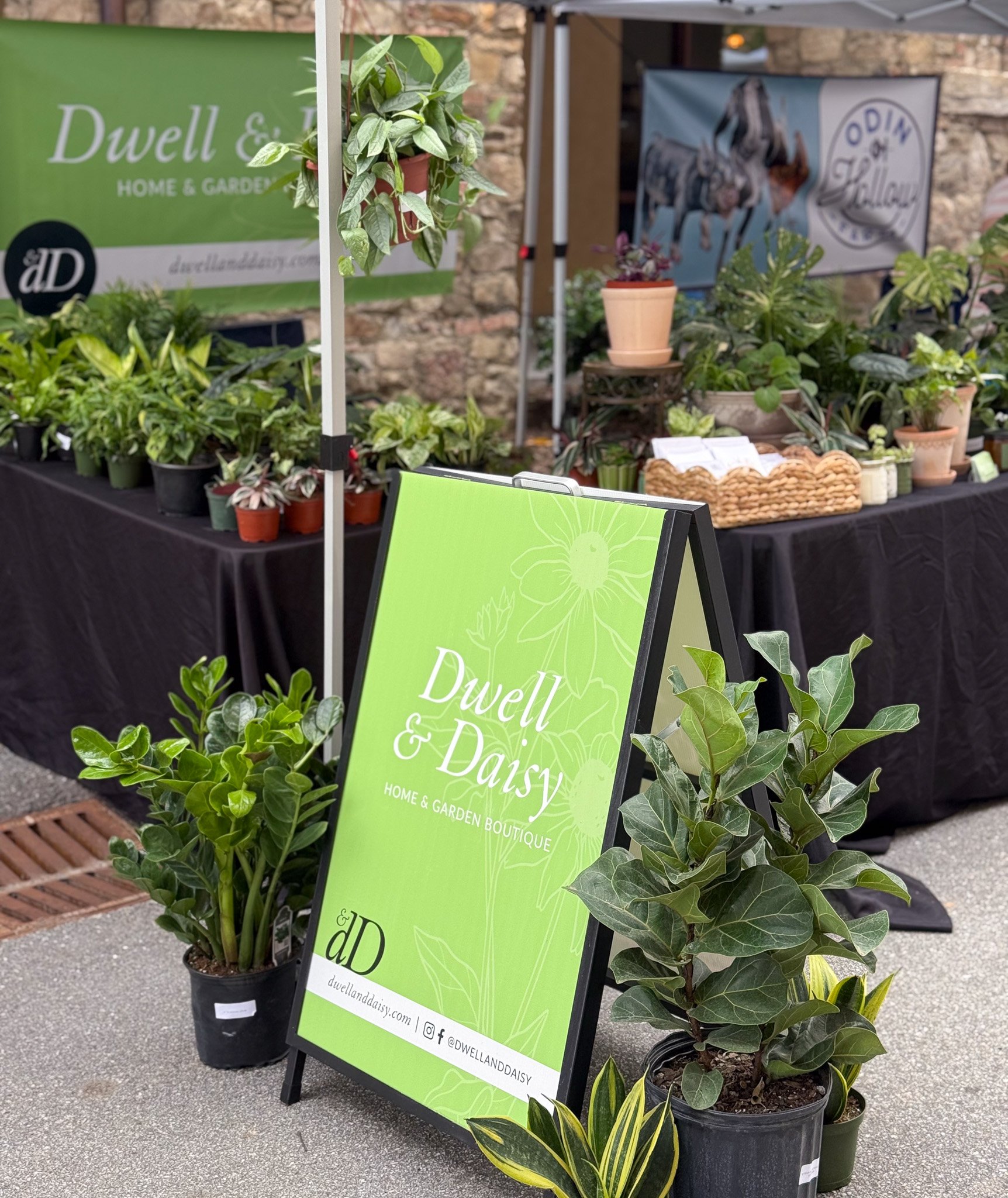
Getting your plants ready for fall doesn't mean the season has to slow down. It's actually one of our favorite times of year to be out at markets across the Upstate. Here's where to find us this season:
Fall Backyard Market at Warehouse at Vaughn's
Saturday, September 12 | 11 am – 3 pm | 109 W Trade Street, Simpsonville, SC
Head to downtown Simpsonville for the Fall Backyard Market at Warehouse at Vaughn's, featuring handmade goods, local boutiques, home decor, art, and great food and drinks. We'll have a selection of plants and pots on hand. It’s the perfect time to pick up something new for your indoor garden before the weather turns.
Aunt Het Fall Festival
Saturday, October 3 | 9 am – 5 pm | Downtown Fountain Inn, SC
We're excited to be part of the 43rd Annual Aunt Het Fall Festival, one of the Upstate's favorite fall traditions. Come say hi on Main Street in Fountain Inn for a day of arts and crafts vendors, live music on two stages, a classic car show, and more.
Follow along on Instagram or Facebook for updates, or check our homepage for the full, up-to-date market schedule.
A little attention now sets your plants up for success through the darker months. And if you're looking for the right pot to repot into come spring, or want a hand troubleshooting a plant that's not adjusting well, stop by and see us at Sawdust Coffee Shop, catch us at one of our upcoming Upstate SC pop-up markets, or contact us here or on social media. We're always happy to talk plants.